Hello Radio: The Vintage Script Font with Modern Soul
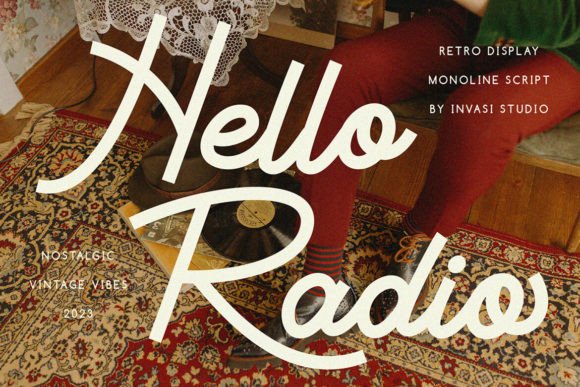
There’s a certain warmth that comes with a crackling radio dial or a handwritten note on a kraft paper label. It feels personal, authentic, and a little bit nostalgic. Capturing that feeling in a digital design can be tricky, but the Hello Radio font does it with effortless charm. This isn't just another script typeface; it's a tool for adding genuine character to your work. Designed as a monoline stroke script, it evokes the spirit of mid-century signage and packaging without feeling like a dusty relic. The slight imperfections in each letter are its greatest strength, giving your text a handcrafted, human quality that stands out in a world of sterile, perfect vectors.
More Than Just a Pretty Typeface
At its core, Hello Radio is a display font meant to make a statement. Its personality is fun, quirky, and approachable. The consistent weight of the monoline stroke provides a clean, rhythmic flow that’s easy to read at larger sizes. But what truly sets it apart is its multilingual support. This means a designer in São Paulo can use it for Portuguese copy just as effectively as a crafter in Berlin uses it for German. This versatility makes it a practical premium font for global projects, ensuring your vintage aesthetic isn't lost in translation.
Think of it as a bridge between the past and present. It doesn’t scream for attention with over-the-top flourishes. Instead, its appeal lies in its understated confidence. The slightly irregular shapes suggest a story, making it perfect for brands and projects that value authenticity over corporate polish. It’s the typographic equivalent of a well-loved leather journal or a vintage enamel pin—functional, stylish, and full of character.
Putting Hello Radio to Work: Practical Applications
The real test of any creative font is how it performs in the wild. Hello Radio is a true team player, designed to cooperate with other elements rather than dominate them. Its strength is in partnership, making it an excellent choice for specific, targeted uses across a wide range of projects.
Branding and Logo Design
For logo design, especially for small businesses, cafes, barbershops, artisan goods, or lifestyle brands, Hello Radio can form the heart of a visual identity. It immediately communicates a friendly, hands-on, and approachable vibe. Pair it with a clean, simple sans serif font for body text to create a balanced and professional brand identity. The key is to use it for the brand name or a key tagline, allowing its personality to shine without overwhelming the entire design.
Packaging and Label Design
This is where the font feels most at home. Imagine it on a coffee bag, a hot sauce bottle, or a craft beer label. The handcrafted feel of Hello Radio reinforces the idea of a small-batch, artisanal product. In packaging design, it can be used for product names, flavor descriptions, or callouts like "Hand-Roasted" or "Small Batch." Its natural imperfections make printed materials feel more tangible and less mass-produced, directly influencing brand perception.
Editorial and Web Design
While it’s not a workhorse for long-form text, Hello Radio has a valuable place in editorial design and web design. Use it for pull quotes, chapter titles, blog post headers, or section breaks to add a burst of personality. On a website, it can make a call-to-action button feel more inviting or give a hero banner a distinct, memorable look. The goal is to use it strategically to guide the reader's eye and break up visual monotony, enhancing the overall readability and user experience by providing clear hierarchy.
Marketing and Social Media
In the fast-scrolling world of social media, a distinctive font can stop a thumb. Hello Radio is fantastic for social media graphics, Instagram Stories, and promotional flyers. Use it for quotes, sale announcements, or event titles to create graphics that feel personal and engaging. Its vintage charm can also work well in marketing materials for pop-up events, farmers' markets, or any campaign aiming for a nostalgic or grassroots feel.
Integrating Hello Radio into Your Design Toolkit
Adopting a new typeface is about more than just liking how it looks. It’s about ensuring it works for your specific needs. Here’s a practical guide to making the most of the Hello Radio font.
Evaluate the Project Fit
First, consider the project's tone. Is it serious and corporate, or friendly and casual? Hello Radio excels in the latter. It’s a poor fit for a law firm’s annual report but a perfect match for a neighborhood bakery’s menu. Always let the project's message and audience guide your font choice. This is a fundamental part of effective modern typography.
Master the Art of Font Pairing
A script font like Hello Radio rarely works well alone. Successful font pairing is about contrast and complement. It pairs beautifully with a geometric or grotesque sans serif font (like Montserrat, Poppins, or Lato). The clean, structured lines of the sans serif provide a stable foundation that allows the organic flow of Hello Radio to stand out. For a more classic look, you could pair it with a sturdy, old-style serif font, but be cautious to ensure the styles don't clash. Always test your pairings together to check for visual harmony.
Check the Details and Licensing
Before you commit, explore the font file. Look for alternate characters, ligatures, or stylistic sets that might offer more variety. Test it at the sizes you intend to use. While it’s a fantastic display font, setting a full paragraph in it will likely harm readability. Finally, and most importantly, understand the commercial font license. If you're using it for a client project, a product for sale, or a business logo, you need to ensure you have the proper license. This is a non-negotiable step for any professional work, protecting both you and your client.
Hello Radio is more than just a collection of letters; it's a design asset